Wedding Veil Lengths: How to Choose the Right One for Your North Carolina Wedding
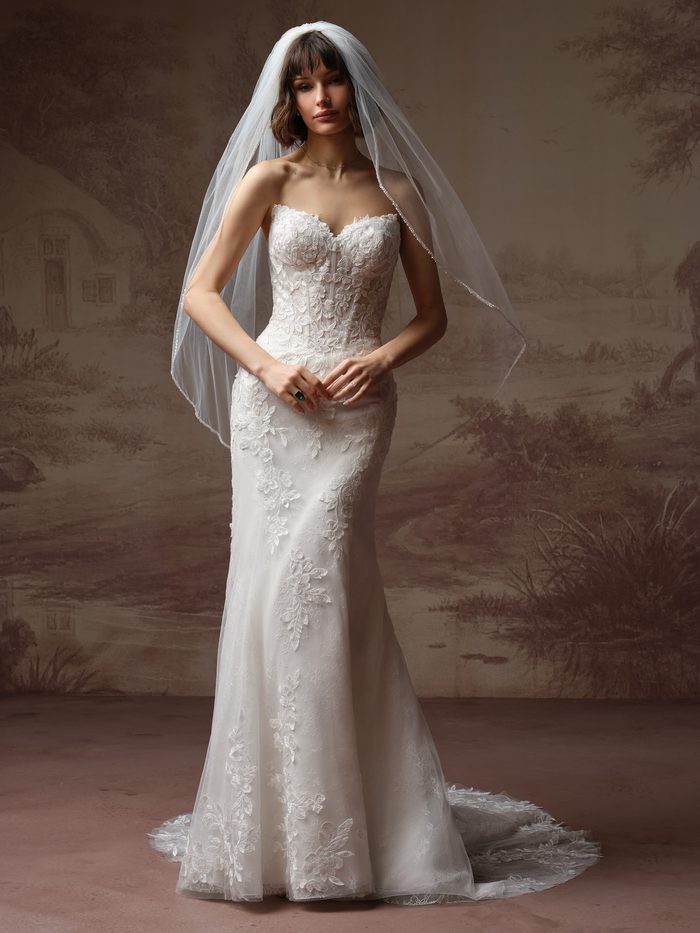
A veil can change your whole bridal look. It can add softness, a little romance, or a moment of real drama as you walk down the aisle. With so many lengths to choose from, though, it helps to know the basics before you start trying them on. Here is a simple guide to the most popular wedding veil lengths and how to pick the one that suits your dress, your hair, your height and your venue.
The most popular veil lengths
These are general guidelines from Maggie Sottero. Veils are measured from where the comb sits in your hair to the end of the tulle, so the same veil can fall a little differently on every bride.
| Veil length | Approximate length | Where it falls | Best for |
|---|---|---|---|
| Fingertip | 36 to 46 inches | Near your fingertips with arms relaxed | Almost any dress and venue |
| Chapel | 90 to 110 inches | Just past the floor | Classic ceremonies and a soft sweep |
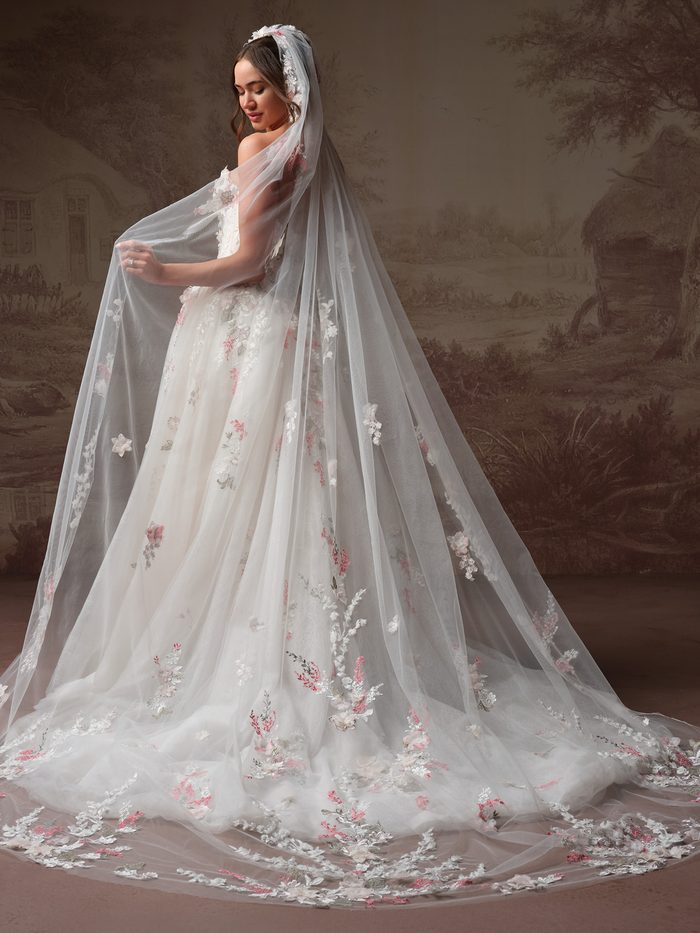
| Cathedral | 108 to 120 inches | Well past the train | Long aisles, churches and formal venues |
| Royal | 120 to 160 inches or more | Far beyond the train | Grand entrances and very long aisles |
You may also hear the word blusher. A blusher is a short extra layer that can be worn over your face for the ceremony. It is a design feature that can come with different veil styles, not a separate length.
How to measure at home
Measuring at home will not replace trying a veil on with your gown, but it gives you a helpful starting point.
- Choose your hairstyle first. A high bun, a low chignon, a half up style and loose waves all place the comb in a different spot, and that changes where the veil ends.
- Start the tape where the comb will sit. That might be the crown of your head, just behind an updo, or tucked under a bun.
- For a fingertip veil, stand naturally with your arms relaxed and measure from the comb down to your fingertips.
- For chapel, cathedral or royal lengths, measure from the comb to the floor, then decide how far you want the veil to trail behind you.
- Wear your wedding shoes, or a pair with the same heel height, so the numbers match your wedding day height.
Choosing a length for your height
Your height can change how a veil looks, but it should never decide what you are allowed to wear. A petite bride can absolutely wear a cathedral veil, and a tall bride can look stunning in a fingertip style.
Petite brides
On a petite frame, a fingertip veil may fall a little lower than expected, closer to mid thigh. Fingertip and chapel veils both create lovely balance, while cathedral and royal lengths add a striking trail behind a longer gown. Think about your train and whether you want the veil to blend in or make a statement.
Average height brides
The chart above is a great guide. Fingertip veils are a versatile middle ground, and each longer length adds more trailing tulle. A full skirt, a fitted silhouette or a dramatic train can all change the effect, so try a few lengths with your dress before you decide.
Tall brides
On a taller bride, a fingertip veil may land closer to the hip. Chapel, cathedral and royal veils give you extra length if you want more coverage or a sweeping trail, but a shorter veil can look fresh and modern too.
Thinking about your North Carolina venue
Where you say “I do” matters just as much as your height.
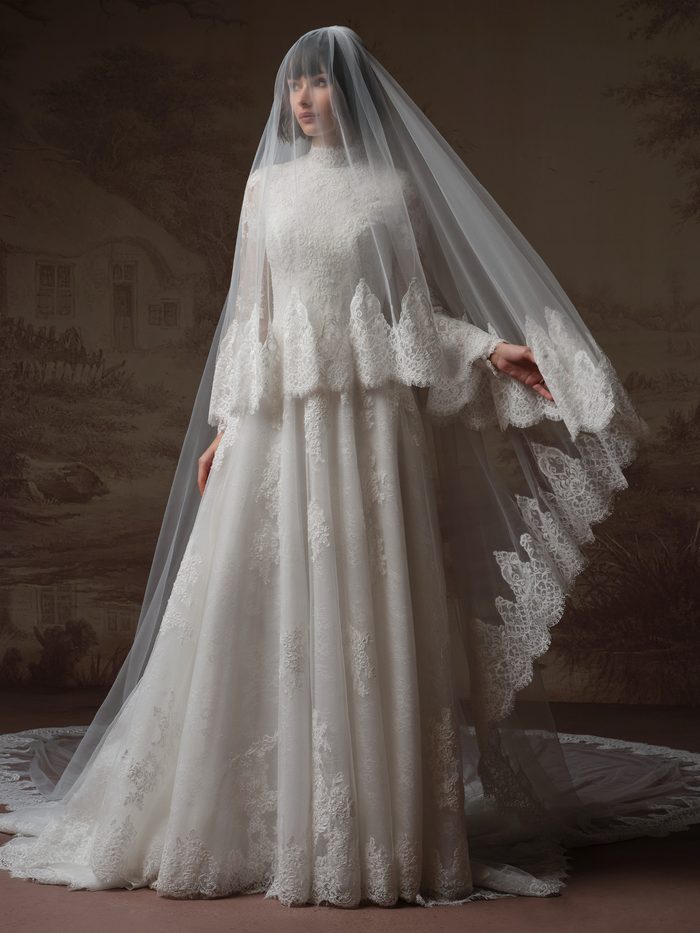
- Churches and long aisles, wherever you are in the state, are made for chapel, cathedral and royal veils that can trail behind you as you walk.
- Beach ceremonies on the coast often come with a breeze off the water. A fingertip or chapel veil is easier to manage, and a long veil can make beautiful photos if you plan for the wind. Ask your stylist about comb placement so it stays secure.
- Mountain and garden ceremonies can mean grass, gravel or uneven paths. Think about what your veil will trail across and how long you will be outdoors.
- Barn and rustic venues pair well with a softer, simpler veil, but there is no wrong answer if you are dreaming of drama.
Try it on with your gown
The best way to choose is to see a few lengths on you, with your dress and your planned hairstyle. A good bridal stylist can help you check the length, adjust the comb and make sure the veil looks right from every angle, including the back, which is what your guests will see during the ceremony.
Adapted from Maggie Sottero, Wedding Veil Lengths: Size Chart and How to Choose, used with permission.